| Unlocking the Secrets of Communications Intelligence COMINT Antenna |
| |
|
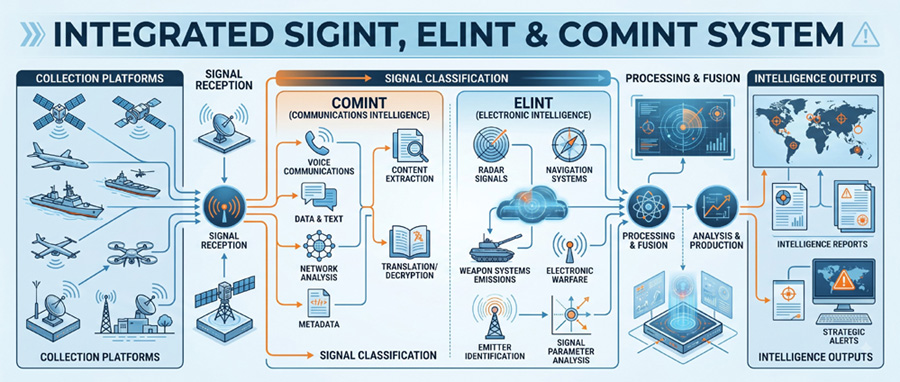
The Ultimate Guide to COMINT & Its Antenna Systems
In the high-stakes worlds of national security, military operations, and global cybersecurity, information is the most valuable currency. But it's not just about having information-it's about knowing what your adversaries are planning before they even make a move. Enter COMINT, or Communications Intelligence.
Whether it's intercepting a radio transmission across a battlefield or monitoring encrypted digital traffic between global syndicates, COMINT is the art and science of gathering intelligence from human-to-human communications. If you want to understand how intelligence agencies and defense forces monitor, intercept, and analyze communications to stay one step ahead, this guide covers everything you need to know about COMINT.
What is COMINT?
Communications Intelligence (COMINT) is the discipline of intercepting, processing, and analyzing communications between people or organizations. Unlike other forms of intelligence that might track the radar signatures of machinery or physical movements on the ground, COMINT is strictly focused on human communication.
This can include:
Voice calls (cellular, landline, or VoIP)
Text-based messages (SMS, emails, encrypted chat apps)
Radio broadcasts (military radios, walkie-talkies, maritime frequencies)
Data transmissions (file transfers between targeted servers)
The ultimate goal of COMINT is to answer the fundamental questions of intelligence: Who is talking? What are they saying? Where are they located? What are they planning next?
How COMINT Works: The Intelligence Lifecycle
Gathering Communications Intelligence is rarely as simple as tuning into a radio frequency and listening. Modern COMINT is a highly technical, multi-stage process.
1. Interception
The first step is capturing the raw data. This requires tapping into the medium where the communication is taking place. Interception can happen via ground-based listening stations, specialized aircraft, naval vessels, or satellites positioned to catch radio frequencies (RF) bouncing off the atmosphere. It also heavily involves tapping into fiber-optic cables and internet exchange points to capture digital communications.
2. Processing and Decryption
Today, very few sensitive communications are broadcast in plain text or open voice. They are scrambled or heavily encrypted. Before an analyst can understand the message, COMINT systems must process the raw data and attempt to decrypt it using advanced cryptography and immense computing power.
3. Translation and Transcription
Because COMINT is a global endeavor, intercepted messages are rarely in the analyst's native language. They often involve obscure dialects, localized slang, or deliberate military jargon. Expert linguists and, increasingly, AI-driven natural language processing (NLP) tools are required to accurately transcribe and translate the data.
4. Analysis and Exploitation
Once the message is readable, intelligence analysts contextualize it. A single intercepted message might not mean much on its own, but when cross-referenced with thousands of other data points, it can reveal troop movements, terrorist plots, or diplomatic strategies.
The Power of Traffic Analysis (When You Can't Read the Message)
One of the most crucial aspects of COMINT is Traffic Analysis. Even if a message is encrypted with military-grade security and cannot be cracked, COMINT analysts can still extract highly valuable intelligence just by looking at the metadata.
| Element |
What It Reveals |
Why It Matters |
| Identities |
Who is calling whom?Who is calling whom? |
Establishes the hierarchy and network of an organization. |
| Location |
Where are the signals originating? |
Tracks the physical movement of high-value targets or military units. |
| Frequency/Volume |
How often are they talking? |
A sudden spike in communication volume often precedes a major physical event, attack, or deployment. |
| Duration |
How long are the calls? |
Differentiates between routine check-ins and complex tactical planning. |
Even if the "what" remains a secret, knowing the "who, when, and where" is often enough to predict an adversary's next move.
Why COMINT is Crucial in Modern Security
COMINT plays a foundational role across several critical sectors:
Military Operations: Tactical COMINT on the battlefield allows commanders to intercept enemy radio chatter, alerting them to ambushes, troop relocations, or supply shortages in real-time.
Counter-Terrorism: By monitoring the communications networks of known threat actors, intelligence agencies can map out terror cells and disrupt plots before they are executed.
Cybersecurity: Threat intelligence often relies on COMINT principles-monitoring chatter on the dark web or intercepting communications between hacker groups to anticipate cyberattacks and zero-day exploits.
Diplomatic Strategy: Understanding the private communications of foreign leaders provides diplomats with massive leverage during international negotiations and treaty drafting.
The Challenges Facing COMINT Today
While COMINT is powerful, it is currently engaged in a technological arms race against modern privacy tools.
1. End-to-End Encryption (E2EE): The widespread commercial adoption of apps like Signal, WhatsApp, and Telegram means that ordinary citizens and malicious actors alike now have access to encryption that was once reserved for nation-states.
2. The "Big Data" Problem: The sheer volume of global communications is staggering. Intelligence agencies intercept petabytes of data daily. Finding the single relevant threat in that ocean of data is incredibly difficult and requires advanced AI filtering.
3. Dynamic Networks: Modern adversaries do not use static communication lines. They constantly swap burner phones, use randomized proxy servers, and switch frequencies, requiring COMINT operators to constantly adapt just to maintain the intercept.
Conclusion
Communications Intelligence remains one of the most vital disciplines in global security. While the methods have evolved from wiretapping telegraphs to intercepting encrypted data packets from satellites, the core mission of COMINT remains unchanged: capturing the conversations of adversaries to neutralize threats before they materialize. As encryption gets stronger, the future of COMINT will increasingly rely on artificial intelligence, metadata analysis, and quantum computing to ensure the world's intelligence agencies aren't left in the dark.
|
|